



For those who are new to buying and selling online, or using digital platforms for bill payments, recharges, and other services, it is common to have concerns and curiosity. Businesses are often worried about setting up online payments systems, while customers may be anxious about making payments online. Businesses must understand both perspectives to overcome related challenges.
Many people are hesitant about online processes due to factors like not having the purchased product physically in hand and the reliance on technology for payment. Despite the increasing trend in digital payments due to events like demonetization and COVID-19, some individuals still hesitate due to lack of knowledge, misunderstandings, fear, or limited resources.
Customers also consider factors like product or service delivery, product satisfaction, and pricing during the purchase. Businesses need to address these fears and adapt their approaches accordingly.
To assist startups and small businesses, this article explores the importance of online payments, their benefits, security measures, optimization strategies, and other essential aspects. It also provides suggestions for customers when making online purchases and payments.
Things to take care of while paying online
Here are some important considerations for online payments:
- Choose a reputable website or app for your purchases. Consider opting for cash on delivery (COD) if it is a new platform, or use online payment for trusted sites.
- Choose a reputable website or app for your purchases. Consider opting for cash on delivery (COD) if it is a new platform, or use online payment for trusted sites.
- Familiarize yourself with the return, refund, and terms & conditions policies listed by the eCommerce shop.
- Double-check your cart before making a payment to ensure you have selected the correct products and provide the accurate delivery address.
- Trustworthy sites ensure the security of online payments. If a transaction fails, your money will be automatically refunded.
- Compare prices on different eCommerce websites to find the best deals. Keep an eye on regular offers, discounts, and free delivery.
Steps to make an online purchase:
- Create an account using your mobile number or email ID.
- Search for products and add them to your cart, considering return/refund/exchange policies.
- Add addresses during the cart process or through account settings.
- Review order details and make an online payment with your preferred option.
- Track your order status and, upon delivery, inspect the product according to the allowed policies.
Online Card Payments
One of the various ways to make payments online is through card payments. These cards can be Credit Cards, Debit Cards, or Prepaid Cards, and they are used at ATMs, POS machines, and when checking out through payment gateways.
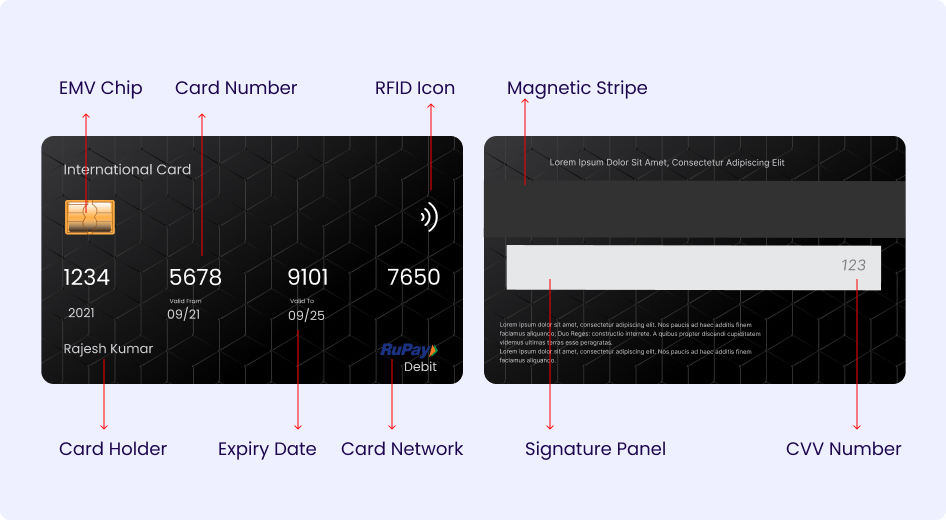
The image below shows an example of a Rupay Debit card and highlights different details.

3D Authentication
Indian payment gateways are 3D secure, meaning that when making a card payment through them, you will need an OTP/Password. The OTP is a 6-digit code usually sent to your registered mobile number or email address, while the Password is the one you set by default. The bank usually provides this password, and you can change it during your first card transaction. Some cards only require an OTP, and no additional passwords are necessary.
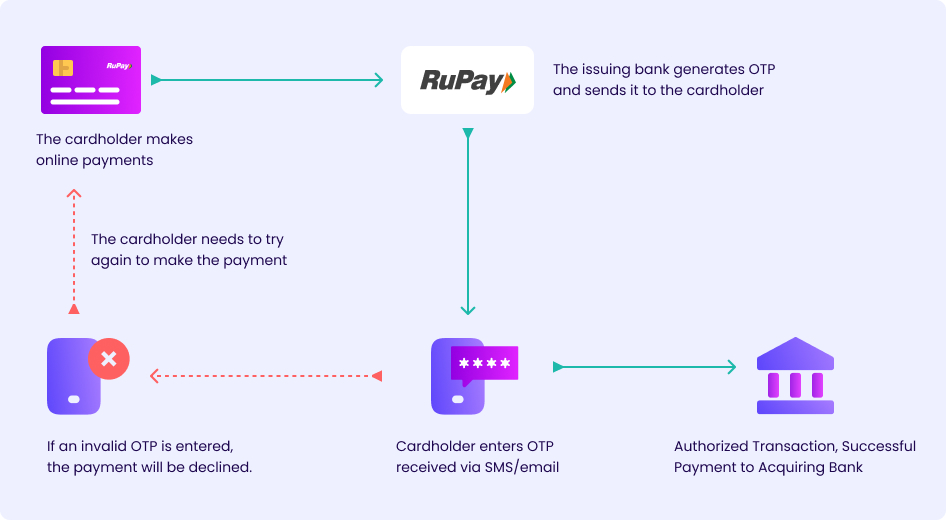
The image above illustrates the steps for making a debit card payment through a payment gateway. The process is straightforward – you only need your card details to proceed with the payment.
Card Checkout Process
If your mobile number is not registered with the bank, you can visit your branch to register it. Some banks also offer the option to register or change your mobile number through ATMs.
During the payment process, you will encounter a PCI DSS-secured payment gateway checkout, displaying the customer’s basic details. Choose “Card” as the payment method for card transactions. On the following checkout page, enter your card details (credit/debit card) and click on “PAY ₹1”. The next screen will redirect you to the bank page to complete the OTP authentication process for the card payment.
ATM/Swipe Machine
Using a card on a swipe machine or ATM is equally simple. The PIN remains the same for both transaction places. When you open an account, the bank provides a kit containing a PIN and Password for debit cards and net banking. If you want to change the PIN, you can do so through the net banking login by following the onscreen instructions.
Why are Online Payments so popular?
In a world hurtling towards digitalization, online payments have become a necessity. Beyond mere convenience, it saves time and effort by eliminating the need to visit physical stores or banks for transactions. This section gives the reasons why businesses need to embrace online payments to reach a broader audience and streamline their financial processes.
Advantages of Online Payments
- Faster Transactions – Accelerate your business transactions with the instant processing offered by online payments.
- Increased Convenience – Provide customers with the flexibility to make transactions from anywhere in the world at any time.
- Improved Cash Flow Management – Experience better control over your finances with efficient cash flow management.
- Reduced Transaction Costs – Save on costs associated with handling cash and cheques.
- Ability to Accept Multiple Currencies – Cater to a global clientele by accepting payments in various currencies.
However, there are a few disadvantages of online payments too. They may involve potential risks and security challenges, such as phishing scams and hacker threats. Also, be prepared for downtime or glitches that might affect the functionality of your online payment system.
Easy Explanation of Online Payments
Understanding the basics of online payments is essential, including its definition, types, and how it works. Indulge into the concept of digital transactions that allow users to pay for products or services through the Internet using credit cards, debit cards, or bank accounts. This section also emphasizes the elimination of the need for physical currency in transactions.
Meaning
Online payment means paying for things using the Internet. Instead of using cash or checks, you use your computer or phone to send money to someone else. You can buy things online or pay bills without needing to handle physical money. This is possible because of special websites and systems that keep your payments safe and make sure the money goes where it needs to.
Popular payment methods in India:
Credit/Debit Cards – You can use your credit or debit card to buy things online. Just type in your card details on the website and the payment is done.
Wallets – E-wallets are like digital wallets on your phone. They store your card information, so you don’t have to type it in every time you pay. Some popular e-wallets in India are Paytm, PhonePe, and Google Pay.
Bank Transfers – This is when you move money directly from your bank account to someone else’s. It’s a safe way to pay online, and many websites offer this option.
UPI Payment: UPI stands for Unified Payments Interface. It is a way to transfer money between bank accounts instantly using your phone. Apps like Google Pay, PhonePe, and Paytm allow you to make payments using UPI. It’s quick, easy, and widely used in India for online transactions.
Preparing for online payment integration requires careful planning and execution to ensure a seamless and secure payment experience. Key steps include:
How to start accepting online payments?
- Creating a Business Bank Account – Establishing a dedicated business bank account is essential for managing finances and facilitating online transactions.
- Selecting a Payment Gateway – Choose a reputable payment gateway such as Accosis that aligns with your business needs, considering factors such as compatibility, transaction fees, security features, and customer support.
- Integrating Payment Gateway with Your Website – Integrate the chosen payment gateway with your website, following detailed integration guides and leveraging technical support to ensure a smooth implementation. You may also use payment links and payment pages, if you do not have a business website.
- Testing the Payment System: Before going live, thoroughly test the payment system to identify and address any issues or discrepancies, ensuring a seamless and error-free transaction process for customers.
What are the other requirements for online payments?
Online payment security is important to protect sensitive financial information and instill trust among customers. Also, optimizing the online payment experience is essential to enhance customer satisfaction and drive conversion rates. Further, to mitigate risks and ensure compliance with industry standards there are certain key compliance considerations too. Below is the list of some of such best practices:
- Using Secure Connections – Employ HTTPS encryption to safeguard data transmission and protect against potential security breaches.
- Implementing Two-Factor Authentication – Enhance security measures by requiring additional verification steps before completing transactions.
- Keeping Software Updated – Regularly update website software and plugins to address vulnerabilities and mitigate potential security risks.
- Educating Employees and Customers – Provide training to employees on identifying and mitigating security threats, while educating customers on how to safeguard their personal information from scams and fraud.
- User Experience Design – Designing an intuitive and user-friendly interface that guides customers seamlessly through the payment process, minimizing friction and enhancing usability.
- Speed Optimization – Ensuring fast loading times for payment gateways and checkout pages to reduce abandonment rates and improve overall user experience.
- Personalization – Tailoring the payment experience based on customer preferences and purchase history to foster a personalized and engaging interaction.
- Continual Testing and Improvement – Regularly testing and refining the payment process based on user feedback and analytics data to identify areas for improvement and optimize performance.
- PCI DSS compliance – Complying with Payment Card Industry Data Security Standards (PCI DSS) to protect cardholder data and maintain a secure payment environment.
- GDPR – Ensuring compliance with the General Data Protection Regulation (GDPR) to protect customer privacy and data rights, particularly for businesses operating within the European Union.
- Tax regulations – Adhering to local tax laws and regulations governing online transactions, including registration, collection, and remittance of sales tax.
Conclusion
In today’s globalized marketplace, embracing online payment solutions is like opening the door to endless possibilities. With Accosis as a trusted partner, businesses can navigate the complexities of digital transactions with ease, ensuring a seamless experience for both themselves and their customers.
By staying ahead of the curve and leveraging the latest advancements in online payment technology, businesses can not only simplify their operations but also promote trust and loyalty among their customer base. As the digital economy continues to evolve, embracing online payment solutions becomes not just a choice, but a necessity for businesses looking to thrive in the ever-expanding digital world. With Accosis, the journey towards digital transformation is not just simplified but also filled with promise and potential for growth.
Sign up today with Accosis!